
Via Francigena • Tuscany • Guided Pilgrimage
Lucca to Siena
A beautifully paced pilgrimage through the heart of Tuscany, beginning in Lucca and ending in Siena, with rolling hills, sacred places, vineyard paths, medieval towns and a prayerful rhythm that allows the journey to be fully lived.
This route offers a compelling blend of manageable challenge, rich Catholic heritage and the quiet beauty of Tuscany — ideal for those who want to step away from daily life and encounter God on the road.
Route at a Glance
Approx. 135 km
•
6 walking days
Suitable for
First-time pilgrims
Terrain
Rolling Tuscan hills
Style
Guided & prayerful
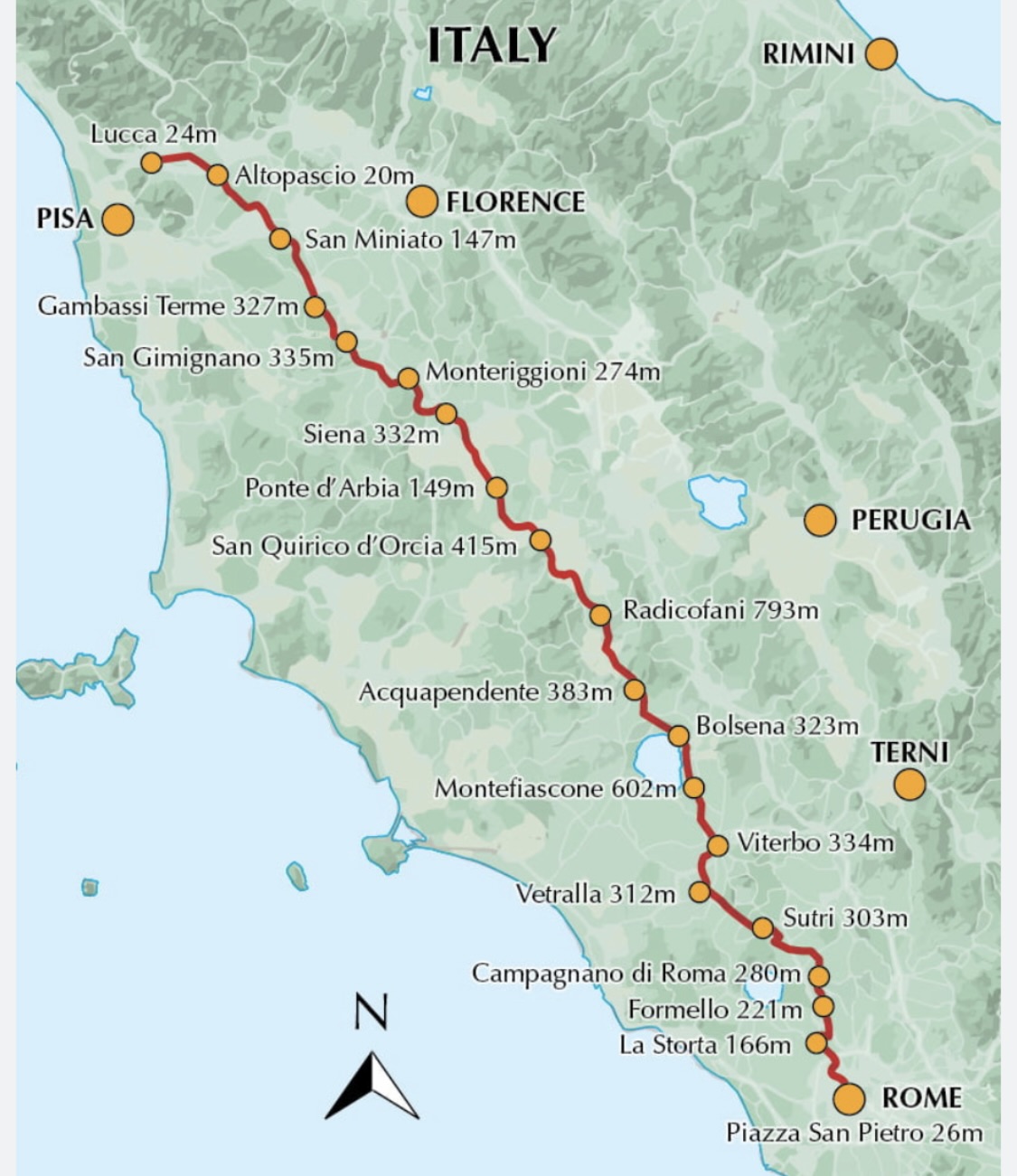
A pilgrimage through the heart of Tuscany
Beginning in the walled city of Lucca and ending in the splendour of Siena, this section of the Via Francigena is one of the most loved pilgrim routes in Italy. It combines peaceful countryside, vineyard paths, medieval hill towns, quiet churches and long views that invite both reflection and gratitude.
The route unfolds with a natural rhythm. The early stages allow pilgrims to settle into walking, while the middle days open into the most iconic Tuscan landscapes of the journey. By the time Siena comes into view, the sense of arrival is not only geographical, but deeply spiritual.
✝
Catholic heritage
Ancient churches, sacred art, Marian devotion and centuries of pilgrim faith.
⛰
Manageable challenge
Rolling terrain with meaningful distances and a strong but achievable walking rhythm.
☼
Beautiful scenery
Vineyards, cypress-lined ridges, woodland paths and unforgettable medieval skylines.
Daily Itinerary
Each day includes route character, terrain summary, walking profile and a place of interest to anchor the journey in both landscape and faith.
Arrival Day
Arrival in Lucca
Pilgrims arrive in the beautiful walled city of Lucca, one of Tuscany’s most elegant and peaceful historic towns. The day is intentionally unhurried, allowing time to settle into accommodation and gently prepare for the journey ahead. Lucca itself has been welcoming travellers for centuries. Its wide Renaissance walls encircle a labyrinth of quiet streets, Roman remains and graceful churches that invite reflection before the road begins. In the afternoon or early evening, the group gathers for an orientation meeting to introduce the Via Francigena, discuss the coming stages and set the spiritual intention for the pilgrimage. Many pilgrims enjoy walking along the famous tree-lined city walls at sunset or visiting the cathedral before dinner.
Walking
No scheduled Walk
Focus
Arrival & Orientation
Terrain
Historic city streets
Profile
Gentle arrival day
Place of Interest
Lucca Cathedral – Duomo di San Martino houses the revered Volto Santo, an ancient wooden crucifix deeply venerated by pilgrims throughout the Middle Ages.
Terrain Summary
Town pavements, old stone streets and a gentle optional walk along Lucca’s famous walls.
Walking Profile
A restful arrival day with space to settle, pray and prepare.
Day 1
Lucca → Altopascio
The pilgrimage begins by leaving Lucca through its historic gates, stepping out of the city and onto quiet paths that quickly transition into open countryside. This first day is intentionally gentle, allowing pilgrims to settle into the rhythm of walking. The route moves through fertile farmland, small hamlets and shaded country tracks. Cypress trees and vineyard views begin to appear, offering the first glimpses of the Tuscan landscape that will accompany the journey south. A particularly memorable stretch follows the historic paving of the ancient Roman road, where pilgrims walk along stone paths that have carried travellers for centuries. The stage ends in Altopascio, a town historically known for its Knights of the Tau, a religious order devoted to caring for pilgrims along the Via Francigena.
Distance
Approx. 18 km
Walking Time
4–5 hours
Terrain
Tracks, farmland, Roman paving
Difficulty
Easy to moderate
Place of Interest
Church of San Jacopo, Altopascio was closely associated with the Knights Hospitaller of the Tau, who offered food, shelter and medical care to medieval pilgrims travelling toward Rome.
Terrain Summary
A gentle opening stage on mixed surfaces including village lanes, country tracks and stretches of old stone road.
Walking Profile
Mostly level walking with a soft introduction to the route.
Day 2
Altopascio → San Miniato
Today’s stage moves deeper into rural Tuscany and begins to feel like a true pilgrim day. Leaving Altopascio, the route crosses the historic Padule di Fucecchio wetlands, a unique natural landscape rich with wildlife and open views. After the wetlands, the landscape slowly begins to rise. Vineyards, olive groves and quiet farm roads lead pilgrims steadily toward the hilltop town of San Miniato, visible from a distance long before arrival. The final climb into San Miniato brings expansive views across the Arno valley — a rewarding moment after a full day’s walking.
Distance
Approx. 29 km
Walking Time
6-7 hours
Terrain
Wetlands, farm roads, gradual climb
Difficulty
Moderate
Place of Interest
San Miniato Cathedral stands high above the town and offers magnificent views over the surrounding countryside, making it a fitting place to pause in prayer after the day’s journey.
Terrain Summary
Longer mileage across flat wetland sections before a steadier rural rise and final hilltop approach.
Walking Profile
A full pilgrim day with an easy opening and a stronger finish.
Day 3
San Miniato → Gambassi Terme
This stage begins one of the most scenic sections of the Via Francigena. Leaving the hilltop of San Miniato, the route descends into classic Tuscan countryside: vineyard tracks, dirt farm roads and gently rolling hills stretching toward the horizon. The terrain feels open and expansive, with wide skies and long views across the Val d’Elsa. Pilgrims pass small chapels, isolated farmhouses and quiet woodland sections that offer welcome shade during warmer months. The landscape has a timeless quality. Here, it is easy to imagine the generations of pilgrims who have walked this same route. The day ends in Gambassi Terme, a small spa town known for its thermal waters and welcoming pilgrim atmosphere.
Distance
Approx. 24 km
Walking Time
5-6 hours
Terrain
Vineyard paths, dirt roads, hills
Difficulty
Moderate
Place of Interest
Sanctuary of Santa Maria a Chianni has long offered pilgrims a place for quiet prayer and rest along the road.
Terrain Summary
Classic rolling Tuscany with broad views, sun-exposed farm tracks and some shaded woodland stretches.
Walking Profile
A flowing up-and-down stage with a steady pilgrim rhythm throughout.
Day 4
Gambassi Terme → San Gimignano
After the longer walking days, this shorter stage offers a more relaxed rhythm. The path winds through quiet farmland, wooded hillsides and vineyard paths before the famous towers of San Gimignano appear on the skyline — one of the most iconic sights in Tuscany. Approaching the town is unforgettable. The medieval towers rise dramatically above the surrounding countryside, marking the final climb into one of Italy’s most remarkable historic towns. Arriving earlier in the afternoon allows time to explore the cobbled streets, artisan shops and peaceful squares.
Distance
Approx. 14 km
Walking Time
3-4 hours
Terrain
Farmland, hillside paths, final climb
Difficulty
Moderate but shorter
Place of Interest
Collegiata di Santa Maria Assunta contains extraordinary fresco cycles depicting scenes from the Old and New Testaments, created to inspire and instruct medieval pilgrims.
Terrain Summary
A shorter rural stage with open tracks, vineyard sections and a memorable approach to the hilltop town.
Walking Profile
Shorter overall, with the main effort saved for the approach into San Gimignano.
Day 5
San Gimignano → Monteriggioni
This is the longest walking day of the pilgrimage and often feels like the most authentic pilgrim stage. Leaving San Gimignano, the path descends into the Elsa Valley, passing vineyards, farmland and stretches of woodland. The route alternates between quiet country roads and natural trails, providing a varied and rewarding landscape. Gradually the terrain begins to rise again as pilgrims approach the extraordinary sight of Monteriggioni, a perfectly preserved medieval walled village standing on a hilltop. The circular stone walls and watchtowers appear almost exactly as they did centuries ago when pilgrims first approached this fortified refuge. Walking through its gates is a moment many pilgrims remember vividly.
Distance
Approx. 30 km
Walking Time
6-7 hours
Terrain
Valley paths, rural lanes, long rolling day
Difficulty
More demanding
Place of Interest
Monteriggioni Fortress Village remains one of the most intact fortified villages in Italy and a historic stopping point for travellers on the Via Francigena.
Terrain Summary
The longest stage: descending, traversing and rising again through mixed rural terrain, woodland and open valley sections.
Walking Profile
A full and demanding day with sustained distance and a strong finish.
Day 6
Monteriggioni → Siena
The final stage of the pilgrimage leads through the gentle countryside surrounding Siena. The route alternates between woodland paths, gravel tracks and quiet farmland roads before gradually descending toward the historic city. Pilgrims traditionally enter Siena through Porta Camollia, the northern gate where travellers arriving from France once entered the city. Inscribed above the gate is the phrase: “Cor magis tibi Sena pandit” — “Siena opens her heart to you more than this gate.” From here, the route continues through the historic streets until the magnificent Piazza del Campo and Siena Cathedral come into view. For many pilgrims, this moment carries deep emotion; the sense of having walked a meaningful journey step by step.
Distance
Approx. 20 km
Walking Time
4-5 hours
Terrain
Woodland, gravel, city approach
Difficulty
Moderate
Place of Interest
Siena Cathedral (Duomo di Siena), dedicated to the Assumption of the Blessed Virgin Mary, is one of Italy’s most extraordinary churches. Basilica of San Domenico, where relics of Saint Catherine of Siena are preserved, offers a powerful connection to one of the Church’s great saints.
Terrain Summary
A gentler concluding stage through wooded and agricultural land before the moving urban entry into Siena.
Walking Profile
Steady walking with a meaningful final approach into the city.
Departure Day
Departure from Siena
After completing the walking stages, the final morning allows time to enjoy Siena at a relaxed pace before departure.
Walking
Optional city stroll
Focus
Departure
Terrain
Historic streets
Profile
Restful close
Place of Interest
Siena Cathedral and the streets around Piazza del Campo offer a final opportunity for thanksgiving before onward travel.
Terrain Summary
No scheduled walking apart from optional sightseeing in Siena.
Walking Profile
A light final morning to gather, reflect and depart.
Why this pilgrimage works so well
Lucca to Siena offers a beautiful progression: a gentle beginning, increasingly rich landscapes, unforgettable hill towns and a final arrival that feels both moving and complete. It is long enough to feel like a true journey, yet contained enough to work wonderfully for a guided group.
For those who have already spent time on retreat, it becomes a natural next step — a way of carrying prayer into movement and discovering how the Lord meets us on the road, one faithful step at a time.
“Pilgrimage changes not only where we go, but how we walk — with greater intention, deeper gratitude and hearts more open to grace.”
Interested in joining a guided Italian pilgrimage?
Enquire about upcoming small-group journeys or book a discovery call to explore whether this pilgrimage is right for you.